


Mental Health Is Built Through Relationships
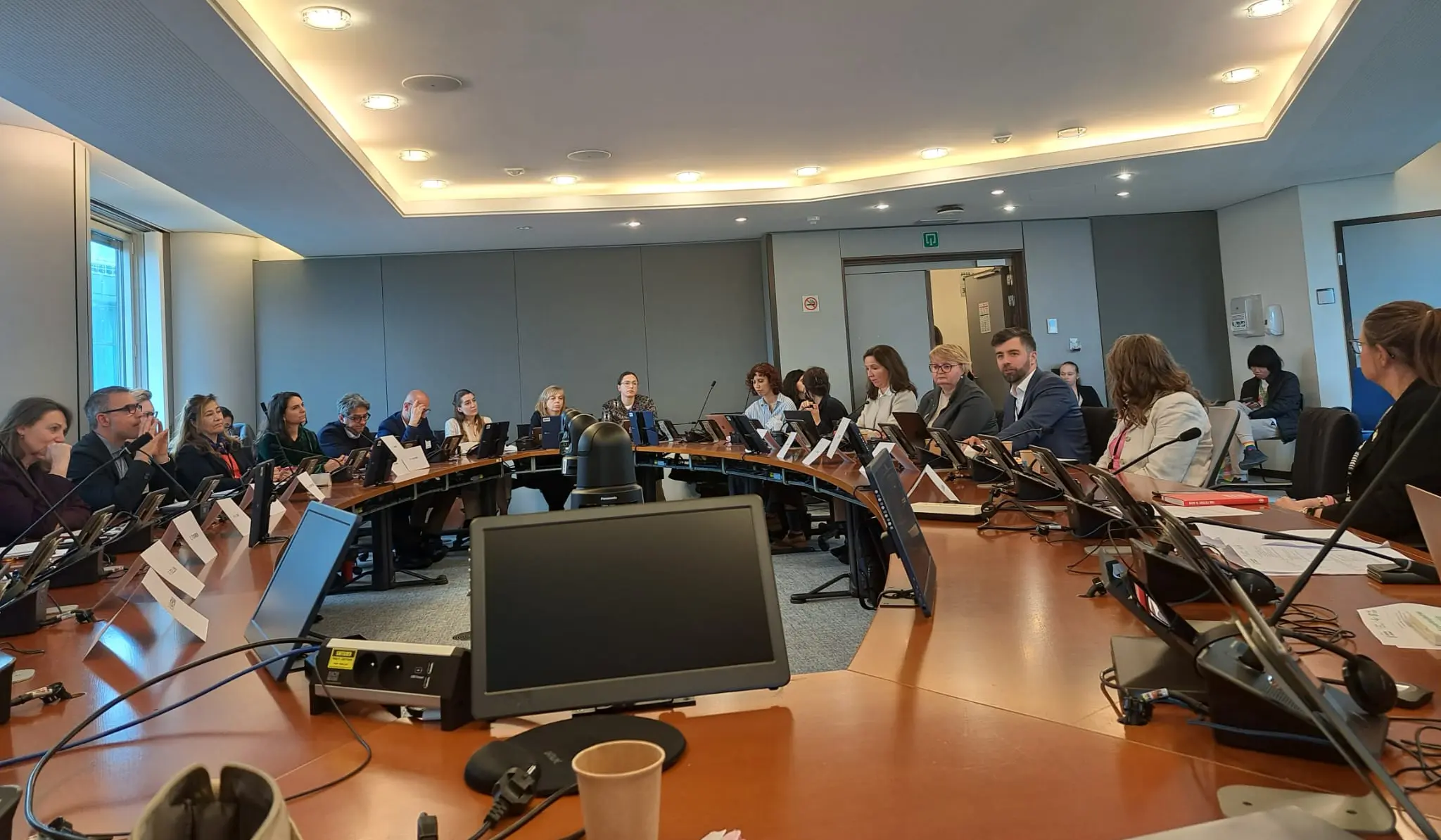
Lessons from the Investing in Children’s Mental Health conference — 7 May 2026
On 7 May 2026, Dynamo International attended Investing in Children’s Mental Health, a European conference dedicated to children’s well-being in the different environments that shape their lives: their families, schools and community spaces. The central message was clear: children’s mental health is not merely an individual or medical matter. It is woven through relationships, living conditions and a sense of belonging. This approach strongly resonates with Dynamo’s work in street work and community action.
Projects rooted in continuity
Several initiatives shared a common thread: stable relationships as a protective factor. In Italy, the Bridge to Autonomy project (Salesians of Don Bosco) supports young people with cognitive disabilities as they transition into adult life. At the heart of the model are inclusion tutors who provide school, family and community support, including after the end of formal schooling. The aim is to prevent breaks in support and to build a real bridge between school, family, services and the community.
The same logic of continuity is at the core of Icehearts Europe in Finland: one mentor accompanies a group of vulnerable children for several years through sport. Sport becomes an entry point to something deeper: belonging to a team. When asked how mentors manage to stay involved for so long, the answer is simple: “They have a team. Would you want to leave your team?”
Supporting families also means prevention
Beyond children themselves, several speakers stressed that children’s well-being is closely linked to the well-being of the adults around them. The Make Mothers Matter network has developed Mother Centers: community spaces where families can break isolation, share experiences and access psychological or social support. Supporting parents, and mothers in particular, is therefore a form of mental health prevention for their children. Mental health is not built only in specialist offices; it also lives in everyday places.
This conviction was echoed by Irish Member of the European Parliament Kathleen Funchion, who welcomed the initiative and complemented it with concrete examples from Ireland. She referred in particular to the School Completion Programme, which supports children at risk of dropping out by addressing very practical barriers: transport, materials and individual support. She also highlighted the importance of offering a wide range of entry points: play therapy, psychological support at school, arts, theatre, writing, skateparks and informal spaces. Her message was clear: services must adapt to children, not the other way around.
School: a place of well-being or pressure?
This is precisely the question raised by two projects focused on the school environment. SWELL/QUEST proposes shifting from the idea of “learning well-being” to “learning through well-being”, placing emphasis on pupils’ participation and on teachers’ own well-being. Too many children, especially the most disadvantaged, feel constantly judged or invisible in systems centred on performance.
From a complementary perspective, TeamUp at School (Save the Children Netherlands), initially designed for displaced and refugee children, uses play and movement to help children regulate their emotions and rebuild a sense of safety without relying on language. This makes it particularly well suited to multicultural contexts.
Peer support: an underestimated resource
Beyond adults and institutions, the conference also highlighted the role children play for one another. The I Support My Friends programme (Save the Children Italy) trains young people to listen to their peers, identify signs of distress and refer them to trusted adults. The reality is simple: when children are struggling, they often turn first to their friends. Peer support therefore becomes a valuable tool for prevention and early detection.
A changing political context
These field practices are taking place at a pivotal moment at European level. On 6 May 2026, the European Commission adopted its first European Anti-Poverty Strategy, accompanied by a strengthening of the European Child Guarantee. Priorities include childcare, school meals, mental health support, access to quality jobs for parents and children’s participation. The challenge now lies in implementation: turning these commitments into concrete support in schools, families and communities.
What the conference confirms
Despite the diversity of the projects presented, several key lessons emerged throughout the discussions. Prevention must come before crisis intervention. Children should not have to wait until they are in severe distress to receive support. Stable relationships — with a mentor, teacher, peer or youth worker — are an essential protective factor. Mental health, finally, cannot be separated from social realities: poverty, housing, isolation and school pressure. And practices that work should become rights, not remain pilot projects.
For a child, one of the most powerful protective factors can be simple, but demanding: the lasting presence of an adult, a group, a school or a community that is able to remain present over time.
Stefania Gorzo